Reading specifications without errors: here's how to do it
Reading specifications without errors? Discover why information is often missed and how AI helps to automatically analyze and structure specifications, drawings, and appendices.

Specifications form the basis of almost every construction project.
Specifications detail what needs to be built, under what conditions, and with what quality requirements. The document serves as a guide for everyone involved in the project, from architect to contractor, and from work planner to estimator.
The document didn't originate in isolation; rather, it's the result of initial sketch designs, the building permit application, and all associated requirements. Based on permits, regulations, and design choices, it specifies exactly what needs to be realized.
In theory, it's a complete and clear overview. In practice, it's different.
Only as you read on do you notice the first inconsistencies. A requirement that doesn't quite match the drawing. A detail described slightly differently. Information scattered across multiple paragraphs.
No major errors. No obvious contradictions. But enough to make you doubt if everything is still correct.
And that's precisely where the problem of reading specifications in practice begins.
Specifications are logically structured. In theory.
Specifications are not randomly structured. In many cases, they follow a fixed system, such as the STABU structure. Chapters, paragraphs, and codes ensure that information is recorded in a logical and consistent manner.
On paper, that's correct.
Everything has its place. And in theory, this should mean you know exactly where to find specific information.
But in practice, that doesn't mean the information is easy to comprehend.
Specifications evolve over time, from different parties, different insights, and different project phases. The specifications are drawn up in the final phase, but that doesn't mean all drawings are fully aligned with them.
This leads to small discrepancies. For example, requirements that were added later but not implemented in all drawings.
Errors don't occur during calculation
Many errors that become apparent later in the process don't originate during calculation.
They originate earlier.
When information is missed, misinterpreted, or simply overlooked.
And that doesn't happen because someone is careless.
But because the process relies on manual searching.
You rely on your own attention. Your own structure. Your own way of working.
And that's precisely where the risk lies.
Why manual work isn't scalable
The more specifications you process, the greater the pressure.
More requests mean less time per document. Less time means faster reading. Faster reading means a higher chance of missing something.
And meanwhile, the specifications themselves continue to grow.
More rules. More exceptions. More details.
The result is that the likelihood of errors increases. Not because people are getting worse at their jobs, but because the complexity continues to grow.
A different way to read specifications
The question then isn't how to read better.
The question is whether you should even read everything yourself anymore.
What if you didn't start by going through the entire document, but with an initial analysis that already shows what's relevant?
A way of working where the specifications aren't first meticulously examined by you, but are structured first.
Where important requirements, exceptions, contradictions, and specifications are automatically recognized and brought together.
So you no longer have to search for information, but immediately see what matters.
Reading Specifications with AI
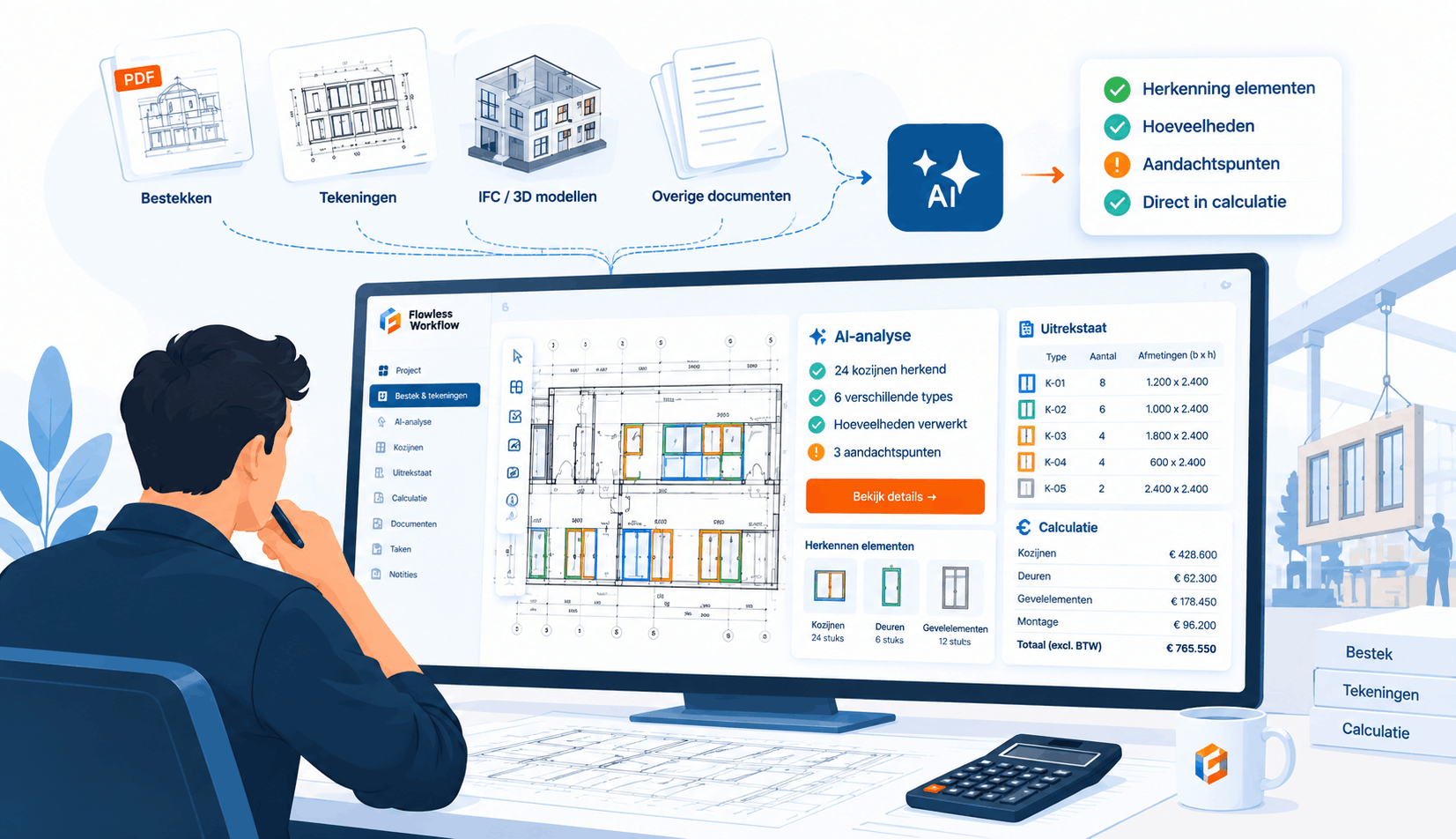
While reading specifications currently starts with browsing and searching, it can also begin with insight. Not by thoroughly reviewing each document yourself, but by automatically extracting all relevant information from specifications, drawings, and appendices.
AI makes that possible.
With our Specification Agent, specifications are automatically analyzed and structured. Instead of manually searching for information, it's directly collected and compiled for you.
You see at a glance which requirements apply, where exceptions exist, and where potential contradictions lie. It also immediately becomes clear which components impact your calculation.
Not scattered across dozens of pages, but compiled into an accurate overview.
This fundamentally changes your way of working.
You no longer start by reading to discover what's there.
You start with insight and only use the specifications to verify that everything is correct.
Conclusion on Reading Specifications
Reading specifications is challenging because information is scattered and you constantly have to weigh different factors against each other.
As long as the process relies on manual searching and interpretation, there's a risk of missing something.
The solution lies in a different way of working, supported by AI.
With our Specification Agent, documents and attachments are automatically processed into an overview that consolidates all relevant information for you, tailored to your business rules.
Discover our Specification Agent
Do you want to stop manually searching through specifications and ensure you don't miss anything?
Discover how the Specification Agent automatically extracts all relevant information from your specifications and converts it into a clear and structured overview.
Schedule a demo and experience how it works:
https://www.flawlessworkflow.com/use-cases/bestek-document-verwerking
Do you want to go from inquiry to project faster with AI?
Discover how BuildIntake helps subcontractors process inquiries smarter, select the right projects, and achieve more with the same team.
Related articles
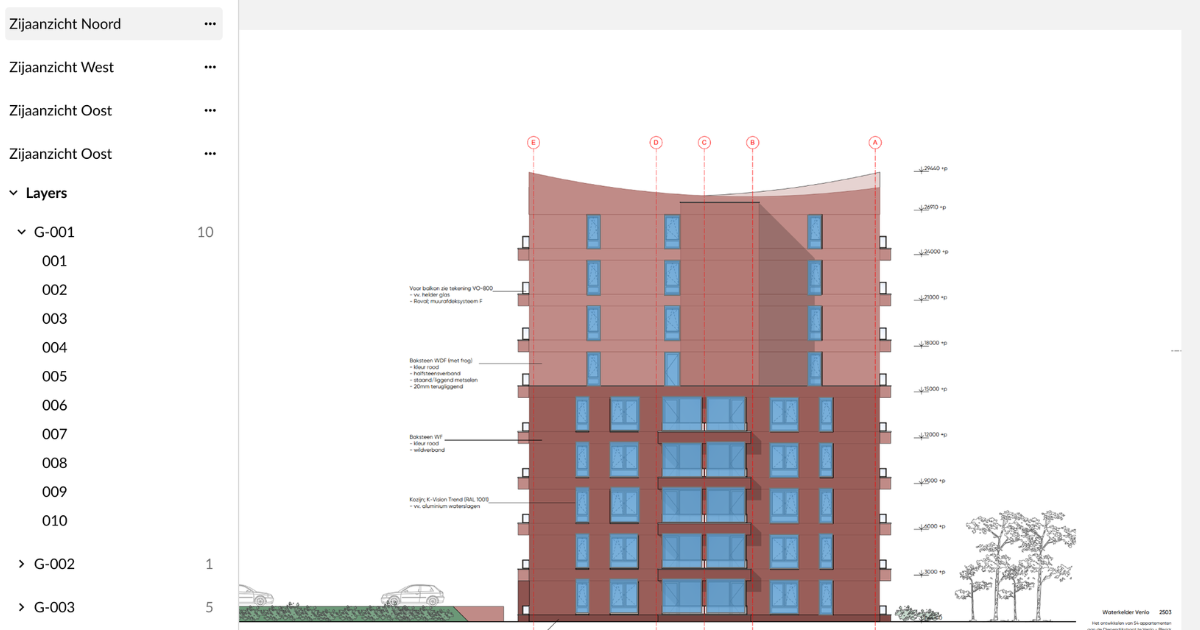
Construction estimation software primarily helps with calculating costs, hours, materials, markups, and margins. AI assists by analyzing project information from various sources simultaneously and providing actionable input for the rest of the estimation process.