Calculating in construction: what AI can mean
Calculating in construction often takes an unnecessary amount of time due to fragmented information. Learn how AI makes your calculation process faster and more reliable.
Start of the callucation
It often starts the same way.
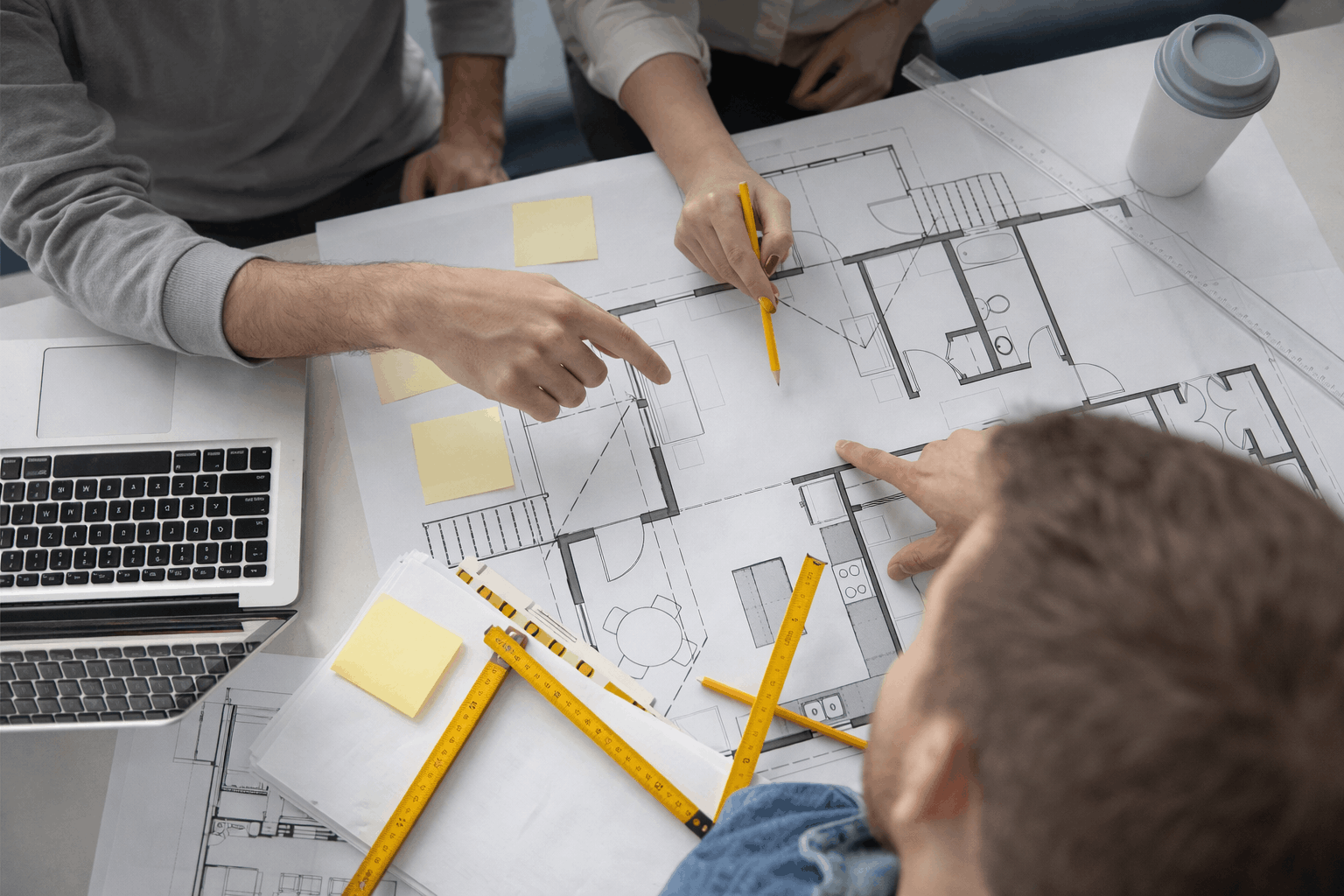
A request is coming in. A new project, a new opportunity. You open the cutlery, look at the drawings and quickly try to form a first picture. Not to calculate directly, but to determine whether you want to calculate at all. What is this project about? Does this suit us? Is there enough work in this?
At first, it feels organized. You think you can get through quickly to make that first assessment.
Until you continue reading.
Page after page, detail after detail. Information that is not always where you expect it to be. A requirement that is hidden somewhere halfway. A detail in the drawing that does not immediately appear in the specifications.
And before you know it, you are no longer forming a first image.
You are searching. Interpreting. Make connections.
Slowly, the feeling changes. You thought you could go through it quickly, but you've already gone an hour later.
And that's when the calculation in construction actually has yet to start.
Calculating is more about searching than calculating
On paper, calculating is about determining costs. In practice, it's mainly about collecting the right information.
A calculator is constantly making connections. What's in the cutlery? What does that mean in the drawing? How do the two relate to each other? And what does that ultimately mean for the price?
This process requires concentration, experience and, above all, time.
Most of that time is not spent on math, but on understanding. Understanding what is meant. Understanding what's missing. Understanding where the risks lie.
And that's where the complexity comes in.
From craftsmanship to complexity
Calculating in construction has not necessarily become more difficult, but it has become more complex.
Where projects used to be relatively organized, the amount of information has increased significantly in recent years. Not because the work is different, but because the requirements have changed.
There are more rules. More standards. More responsibilities. From permits, safety, sustainability and quality, increasing requirements are being placed on what is built and how it is laid down.
This is immediately reflected in the documentation.
The specifications have become more extensive. Drawings include more detail. And information is not just recorded in one document, but distributed across multiple sources.
As a result, a project no longer consists of one clear whole, but a collection of documents that together should tell the story.
However, that story is rarely told in one place.
Why calculations keep coming back
In an ideal world, you make one calculation and it's done. In reality, that is rarely the case.
Something is always changing. An architect modifies a material. A detail is being changed. A new version of the cutlery arrives. Sometimes small, sometimes big, but always with impact.
And every change has consequences.
You go through the documents again. You're looking for exactly what's different. You're trying to understand what this means for your calculation. Then you adjust your calculation.
And this is often not necessary once, but several times within the same project.
The result is that a large part of the work is repeated. Not because it has to be done, but because the process is organized in this way.
The problem is not in the calculation
Many organizations are trying to solve this problem by checking more closely or taking more time for the initial calculation. But that changes little.
This is because the cause lies in the process rather than in the calculation itself.
The information you work with is rarely complete. Specifications and drawings do not always match perfectly. Important details are scattered across various documents. And even if you go through everything carefully, interpretation remains necessary.
This means that the input you are counting on is always uncertain.
And as long as that uncertainty remains, the outcome will continue to change.
A different way of looking at calculation
What if the problem is not with the input, but with how we deal with it?
Instead of striving for perfect information, you can also look at the consistency of the outcome. Don't try to fully understand each document before you start, but make sure you always work from the same structure and logic.
A scan that extracts the information you need. It makes connections between cutlery and drawing. And that gives you a complete picture without having to go through hundreds of pages yourself. Regardless of how the specifications are structured or how the drawings were supplied.
From manual search to structured insight
Where calculation now starts with searching, it can also start with insight. Not by going through each document yourself, but by having the information analyzed and structured first.
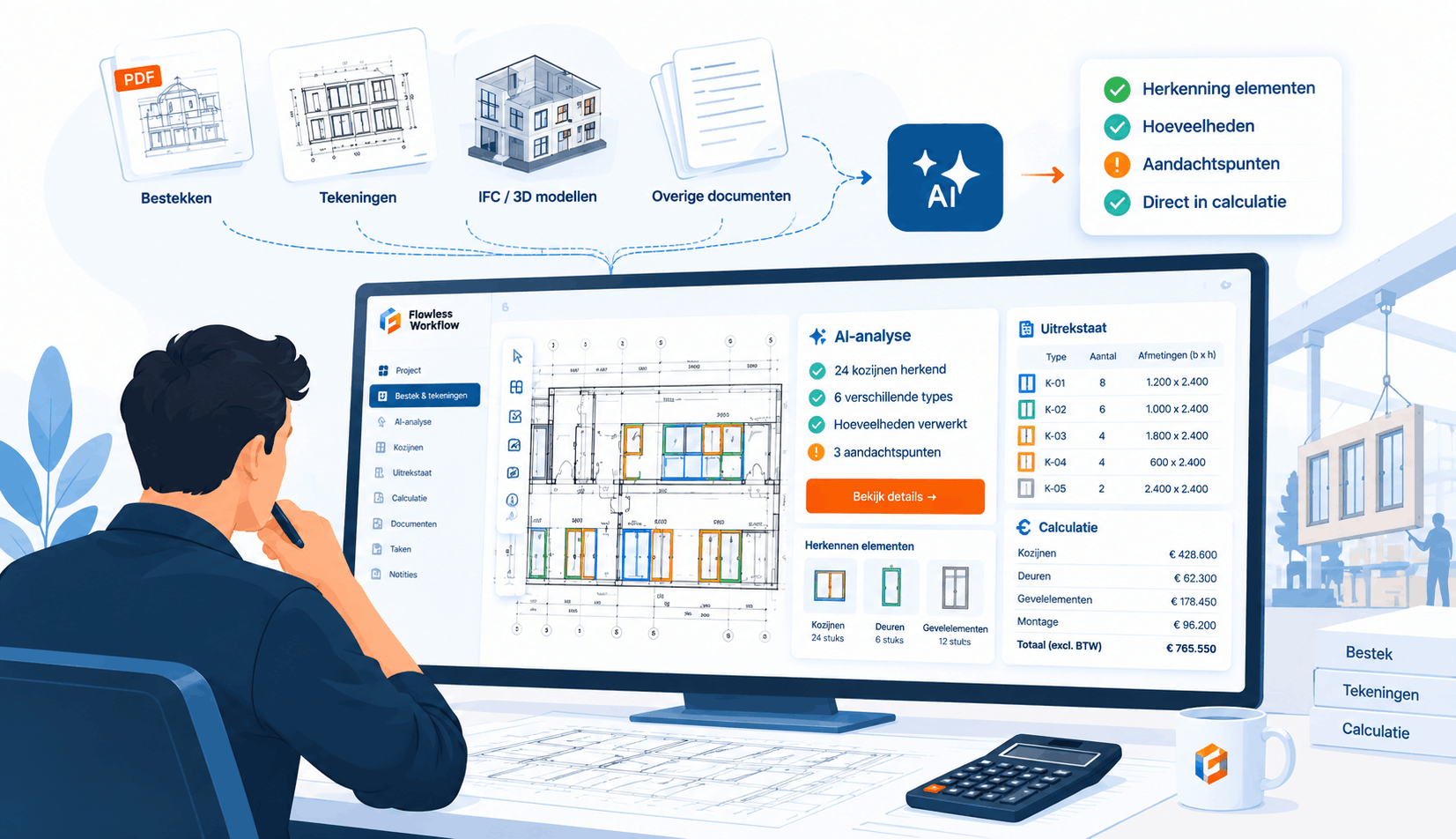
With our Specifications Agent, specifications, drawings and attachments are automatically read and processed. Instead of manually searching for relevant information, it is collected, structured and linked directly for you.
You can see which requirements apply at a glance. Which parts are relevant to your calculation. And where there are possible deviations or risks.
As a result, the starting point changes.
You no longer start with a blank screen and a stack of documents, but with an overview where the most important information is already ready for you.
The role of the calculator is thus shifting. From someone who collects information to someone who reviews and refines it.
This not only makes the process faster, but also more reliable.
Construction calculation conclusion
When you look at how construction calculations work today, it's not surprising that calculations involve a lot of errors.
Not because they calculate incorrectly, but because the surrounding process requires so much. It starts with searching documents, interpreting information and making connections. And exactly that part has to happen over and over again as soon as something changes.
As long as that process does not change, recalculating remains part of the work.
The solution does not lie in more control or more time, but in a different approach. An approach where information is structured automatically and you work from a consistent basis.
Discover our Cutlery Agent
Do you want to structurally accelerate your calculation process and reduce errors?
Learn how the Bestek Agent automatically analyses specifications, drawings and attachments and converts them into a consistent basis for your calculation.
Schedule a demo and experience how calculating no longer starts with searching, but with insight.
Do you want to go from inquiry to project faster with AI?
Discover how BuildIntake helps subcontractors process inquiries smarter, select the right projects, and achieve more with the same team.
Related articles
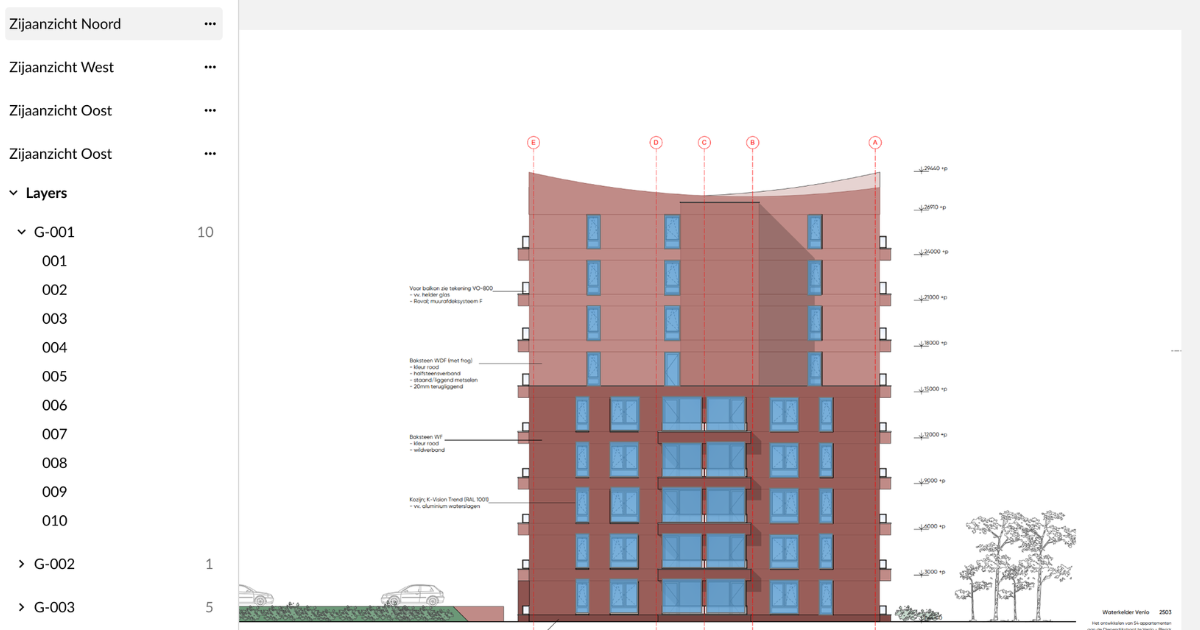
Construction estimation software primarily helps with calculating costs, hours, materials, markups, and margins. AI assists by analyzing project information from various sources simultaneously and providing actionable input for the rest of the estimation process.