Analyzing construction drawings with AI
Construction drawings contain vast amounts of information for calculation, but in practice, interpreting, checking, and comparing them still takes hours of manual work. Discover how AI helps with the automatic analysis of construction drawings.
Analyzing Construction Drawings with AI: Faster from Drawing to Calculation
Construction drawings form the basis of almost every construction project.
From elevations and detailed drawings to floor plans and revisions: all crucial information for calculation is included. Dimensions, materials, quantities, connections, requirements, and exceptions are documented across dozens of different drawings and documents.
In theory, that should be sufficient for quick and reliable calculations.
In practice, it works differently.
A construction drawing rarely tells the complete story on its own. Information is scattered across multiple documents, revisions contradict each other, and crucial details are hidden in notes, cross-sections, or supplementary attachments.
Consequently, calculation often begins not with computing, but with searching.
- Searching for what is relevant.
- Searching for which version is correct.
- Searching for what impacts the calculation.
And that's exactly where most time is lost.
Why Construction Drawings Cause So Much Manual Work
A construction drawing appears straightforward.
You immediately see what needs to be built. But as soon as an estimator really gets to work, the interpretation begins.
Because a construction drawing never stands alone.
There are:
- specifications
- floor plans
- detail drawings
- revisions
- additional requirements
- contract documents
- emails
- product specifications
And all that information must ultimately come together in a single estimate.
That means estimators are constantly busy with:
- comparing
- checking
- interpreting
- counting
- measuring
- linking
Why revisions create so much extra work
Something changes in almost every project.
An architect adjusts a detail. A dimension changes. A material is altered. A new revision of the drawing comes in.
And from that moment on, a large part of the process starts all over again.
Estimators reopen:
- specifications
- revisions
- detailed drawings
- floor plans
- facade drawings
Not to recalculate, but to first figure out exactly what has changed.
And that often takes more time than the calculation itself.
Especially when:
- revisions are not clearly indicated
- specifications and drawings don't align
- multiple disciplines are intertwined
- information is scattered across different documents
Why blueprints always require interpretation
Many organizations try to prevent calculation errors by implementing additional checks.
But the problem usually doesn't lie in the post-calculation check.
The problem arises earlier.
When someone has to interpret a blueprint.
Because even experienced estimators often look at:
- detail drawings
- dimensions
- exceptions
- revisions
- technical requirements
As a result, differences in output arise, even though everyone is working with the same documents.
And as long as blueprints are processed manually, that reliance on interpretation will persist.
What AI can extract from blueprints
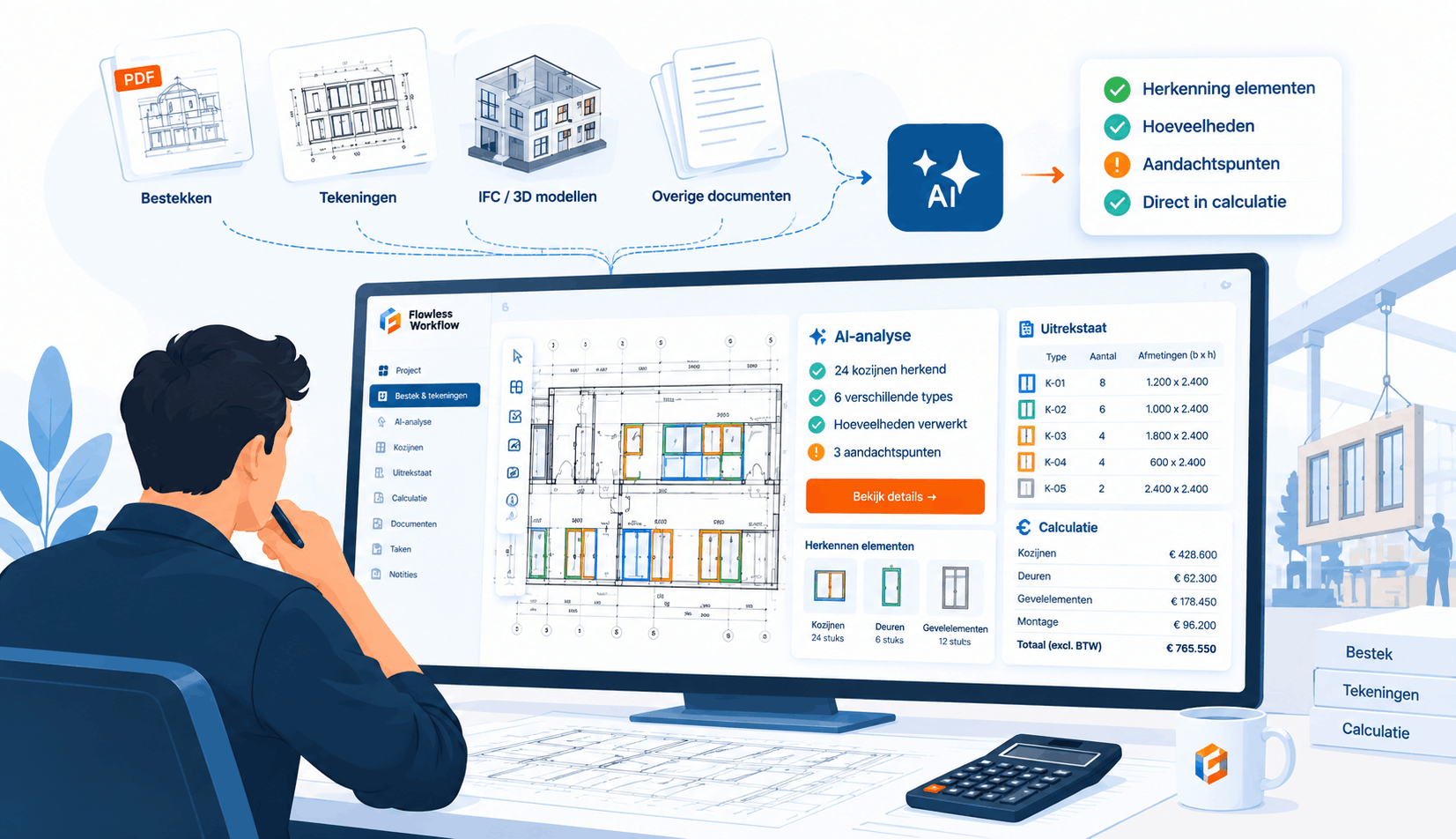
AI makes it possible to automatically analyze and structure blueprints.
Instead of manually searching through PDFs and revisions, AI can instantly identify:
- dimensions
- quantities
- elements
- spaces
- detailed information
- project requirements
- revisions
- inconsistencies
Additionally, AI can identify connections between:
- construction drawings
- specifications
- detailed documents
- additional attachments
This not only provides quicker insights but also greater consistency in calculations.
Analyzing construction drawings with AI
With our Bestek Agent construction drawings, specifications, and revisions are automatically processed into a structured calculation basis.
The Bestek Agent assists with, among other things:
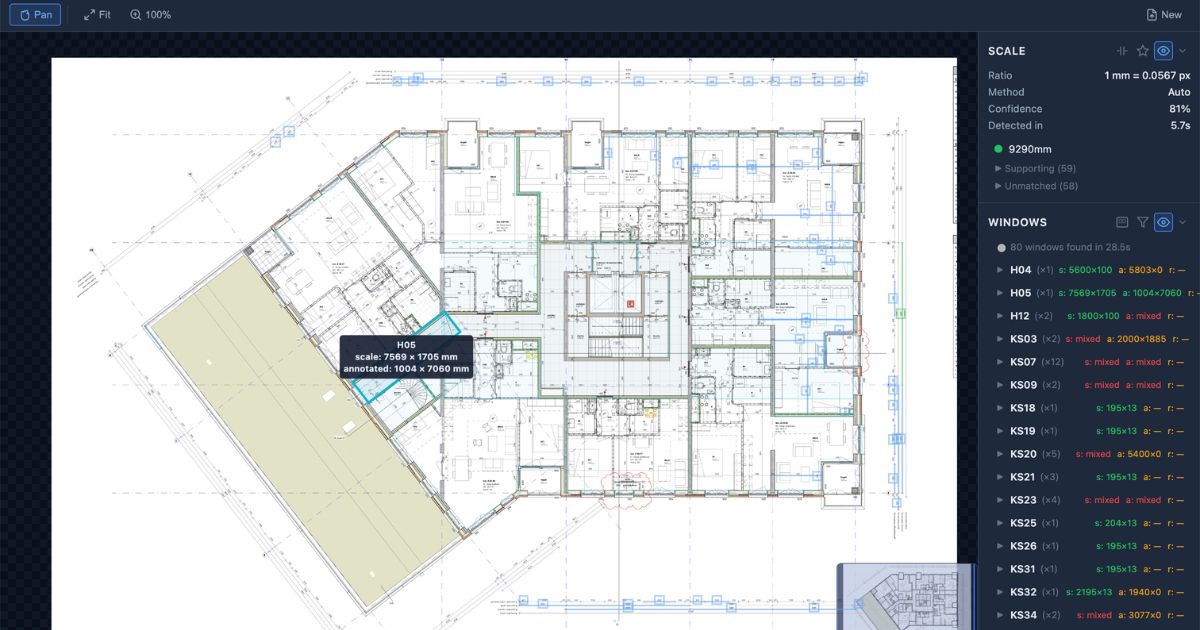
- recognizing architectural elements
- counting components and quantities
- analyzing dimensions and metadata
- linking specifications and drawings
- identifying inconsistencies
- re-processing revisions
This shifts the work from manual searching to targeted assessment.
You no longer start with a blank screen and hundreds of pages of documents, but with an overview where relevant information has already been gathered for you.
From construction drawing to calculation basis
Where calculations once began with manually sifting through drawings, a new way of working is now emerging.
A method where AI:
- analyzes documents
- structures information
- interprets drawings
- compares revisions
- links project requirements
And then estimators only need to check and refine.
This not only ensures:
- less manual work
- less duplicate work
- fewer interpretation differences
But also for:
- greater speed
- greater consistency
- increased capacity within the same team
What information AI recognizes from construction drawings
The Bestek Agent supports, among other things, the recognition of:
- architectural elements
- dimensions
- areas
- quantities
- revisions
- dimensioning
- detailed information
- project-specific requirements
- inconsistencies between documents
- linked information from specifications
This provides quicker insight into what is relevant for cost estimation and work preparation.
Which construction companies would find this interesting?
AI blueprint analysis is interesting for construction companies that work daily with:
- specifications
- revisions
- detailed drawings
- floor plans
- facade drawings
- technical documentation
Including:
- window frame manufacturers
- facade builders
- steel construction companies
- roofers
- interior builders
- finishing contractors
can thus more quickly Estimating and process more requests without additional capacity.
Conclusion
Construction drawings contain enormous amounts of information.
But as long as estimators remain dependent on manual searching, interpreting, and checking, estimation will continue to be time-consuming.
Not because the math is hard.
But because information is spread across:
- drawings
- revisions
- specifications
- detailed documents
- attachments
AI fundamentally changes that process.
By automatically analyzing construction drawings and linking them to specifications and project requirements, a consistent estimation basis is created, enabling estimators to work faster and more reliably.
Do you want to go from inquiry to project faster with AI?
Discover how BuildIntake helps subcontractors process inquiries smarter, select the right projects, and achieve more with the same team.
Related articles
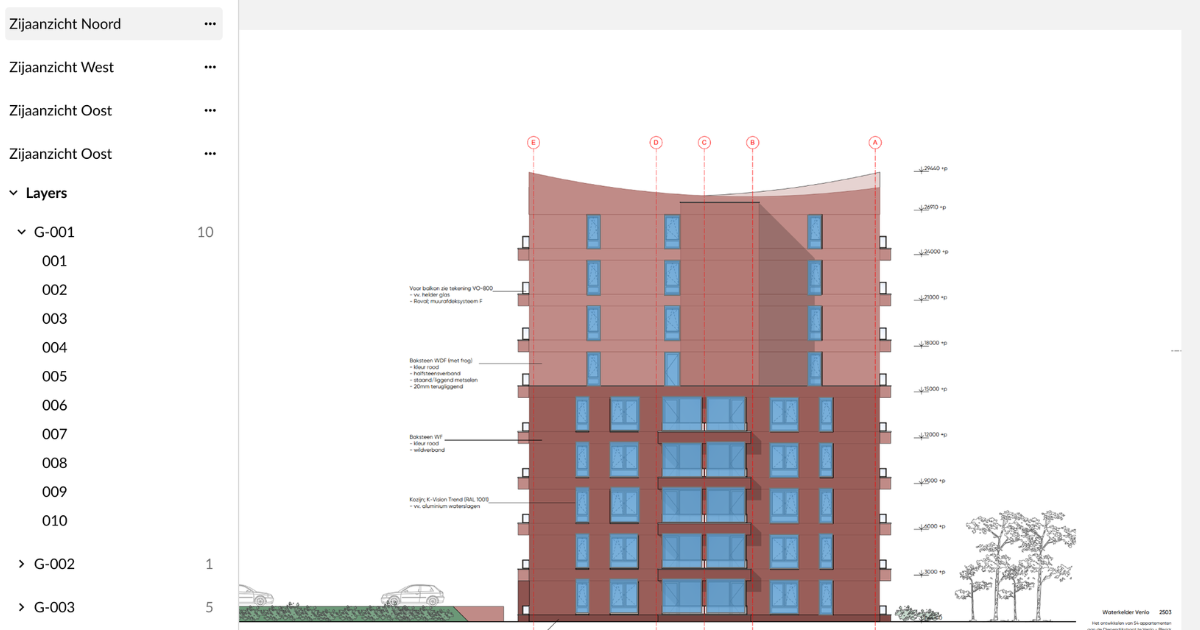
Construction estimation software primarily helps with calculating costs, hours, materials, markups, and margins. AI assists by analyzing project information from various sources simultaneously and providing actionable input for the rest of the estimation process.