The Zero Admin Enterprise in the Manufacturing Industry
Labour scarcity is increasing, customer expectations are rising and processes are becoming more complex than ever. The manufacturing industry can no longer afford administrative inefficiency. Does the Zero Admin Enterprise provide the answer?
The manufacturing industry is at the beginning of a decisive decade. Labour scarcity is increasing, customer expectations are rising and processes are becoming more complex than ever. At the same time, digital technologies promise unprecedented efficiency, but many organizations are struggling with one fundamental question:
How do we translate technology into operational value?
Bee Flawless Workflow we see a clear direction forward: the Zero Admin Enterprise. An organization where data and AI take over the administrative burden, so that people can focus on engineering, production and innovation.
This is not a distant vision. It is a strategic change.
From administration to value creation
In many production environments, highly educated professionals spend a surprisingly large part of their time on administrative work:
- Collecting information from various systems
- Coordinate data between ERP, PLM and spreadsheets
- Prepare documentation
- Correct errors through manual transfers
This isn't a tool issue. It is a data and process design problem.
As long as information is scattered across systems, people will continue to act as a “interface” between software. That takes time. And time is the scarcest capital in production environments.
The Zero Admin Enterprise's mission is clear:
take the administration out of work, not the person out of the process.
What is a Zero Admin Enterprise?
A Zero Admin organization does not mean that people disappear. It means that non-value-adding work disappears. For example, administrative work.
In a Zero Admin organization:
- Data is centralized and contextualized
- AI agents take over repetitive administrative tasks
- Information flows seamlessly from sales to engineering, planning and production
- Employees work with insights instead of spreadsheets
- Decisions are made based on real-time organizational data
Time is protected and reinvested in value creation.
Why AI only works when data reflects reality
AI adoption is accelerating, but many initiatives are currently not having enough impact. The reason is simple:
AI is only as good as the data model underneath it.
In many factories, data exists everywhere, ERP systems, PLM tools, planning software, e-mails, but nowhere in conjunction.
Without a structured, living data model that reflects how the organization actually works, AI cannot support reliable decisions. Instead of insight, noise is created.
That's why a Zero Admin transformation doesn't start with automation, but with:
- Centralizing data
- Add context
- Model processes as they really work
Automation without a foundation increases complexity. Automation based on an integrated data model creates intelligence.
Thinking in data flows
A fundamental mental shift for manufacturing leaders is this:
Don't see your organization as separate departments, but as an ongoing data stream.
When production is approached as an integrated data stream:
- Will capacity planning become dynamic instead of static?
- Does engineering preparation become proactive
- Does sales information flow directly into production?
- Are exceptions handled systematically?
The organization is starting to look like a software system with a physical output: the factory.
That is organizational intelligence.
The role of people in an AI-driven factory
A common concern about AI is job loss. In the manufacturing industry, the reality is different. After all, the problem is not that there are too many people, but rather too few.
AI does not replace craftsmanship or technical expertise. AI acts as a digital colleague who:
- Data processed
- Performs administrative actions
- Information structures
So that people can:
- Innovate
- Making Decisions
- View insights
- Designing better products
No engineer gets excited about administrative tasks. AI gives them back their time.
Traditional versus data-driven production
A traditional manufacturer relies on experience, heroism, and manual coordination to keep processes running.
A data-driven manufacturer relies on:
- Shared, reliable information
- Transparent data flows
- AI-assisted planning
- Real-time insight into operations
The difference is not in culture or craftsmanship. The difference lies in organizational intelligence.
Data-driven organizations know where they are, where they're going, and how today's decisions affect tomorrow's performance.
Where do you start?
The biggest mistake organizations make: starting too big.
A more effective approach:
- Create awareness at the executive level
- Identify the most painful process
- Centralize the data behind that process
- Designs a targeted AI agent
- Measure impact in hours saved
Success creates trust. Trust drives adoption. Adoption makes transformation possible.
Measure success over time, not hype
The impact of AI should not be measured in vague dashboards or buzzwords, but in hours.
Time saved means:
- Fewer administrative FTE
- Faster turnaround times
- More innovation capacity
Time is not renewable. Saving them is the ultimate productivity gain.
Why this is urgent now
Markets fluctuate. Competition is increasing. Customers expect faster delivery with fewer errors. Manufacturers that do not modernize their data foundation are losing control over their operations.
Organizations that use AI strategically gain speed, resilience and clarity. The future of manufacturing is not about replacing people with machines. It's about strengthening human expertise with intelligence that operates at the speed of data.
Final thought
The factories that will thrive in the coming decade are not the organizations with the most tools.
They are the organizations with the clearest data stream.
The Zero Admin Enterprise is no longer a vision.
It is a competitive necessity.
Sign up for our newsletter
Every month, we'll send you one email full of smart insights about data-driven work, AI applications and software choices that really help you.
Related articles
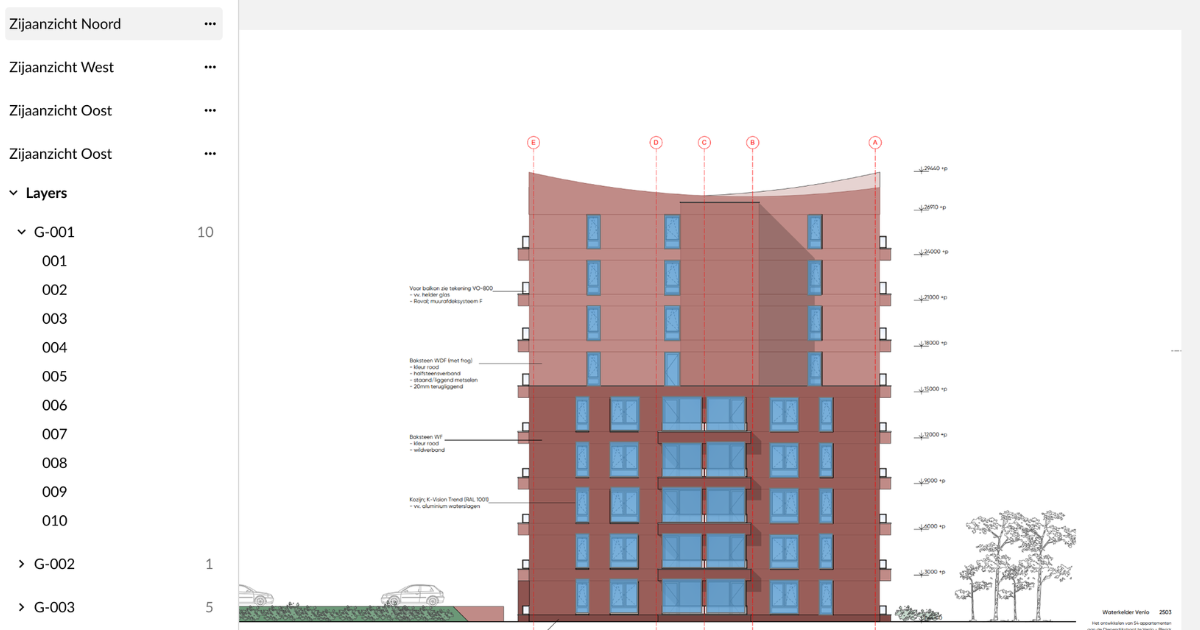
Construction estimation software primarily helps with calculating costs, hours, materials, markups, and margins. AI assists by analyzing project information from various sources simultaneously and providing actionable input for the rest of the estimation process.